

Emotional intelligence
Hierdie inhoud is nog nie in jou taal beskikbaar nie.
Emotional intelligence is noticing emotions, in yourself and in other people, and handling them well. In VirgilTrack’s Emotional Intelligence area you can learn these skills a few minutes at a time, practise hard conversations safely, check in on your week, and recognise colleagues’ work.
Who uses this area
Section titled “Who uses this area”- Everyone can learn, practise, take the self-assessment, check in on their week and see the kudos they have received.
- Managers and the CEO also have a Your team tab. It helps them notice when someone in their team might welcome a conversation, prepare that conversation, and send kudos.
Open Emotional Intelligence from the menu on the left. The top bar shows Emotional Intelligence, under People.
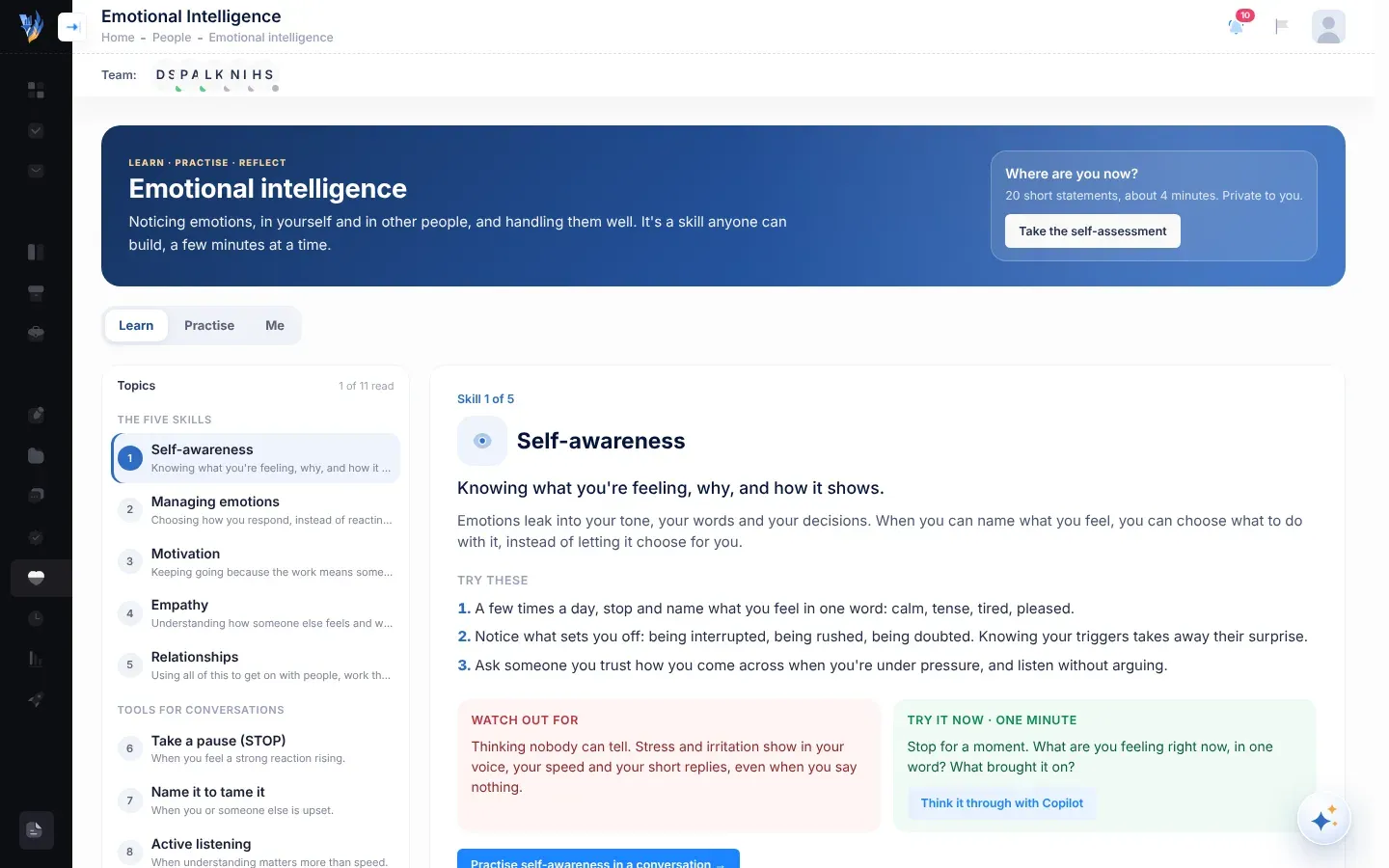
The tabs
Section titled “The tabs”| Tab | What it is for | Who sees it |
|---|---|---|
| Learn | Short lessons: the five skills, tools for conversations, and words for feelings. | Everyone |
| Practise | Quick drills to recognise emotions, and practice conversations where Virgil plays a colleague. | Everyone |
| Your team | Workload facts for each person who reports to you, the check-ins they chose to share, and help to prepare a conversation or send kudos. | Managers and the CEO |
| Me | Your weekly check-in, the kudos you’ve received, your self-assessment and your practice history. | Everyone |
At the top of the page, the banner shows your latest self-assessment scores. If you haven’t taken it yet, it offers Take the self-assessment.
Who sees what
Section titled “Who sees what”VirgilTrack never tries to read anyone’s feelings. The page says it plainly: “VirgilTrack doesn’t guess how anyone feels.”
| What | Who can see it |
|---|---|
| Your weekly check-in | Only you, unless you tick Share this with my manager. Then the person you report to sees it. |
| Your team’s check-ins, together | Your manager sees the team’s average over the last 30 days, without names, and only once at least 5 people have answered. Every answer counts towards it, shared or not. |
| Your self-assessment | Only you. |
| Your practice conversations and scores | Only you. |
| Kudos you receive | You. Your manager sees how many you received in the last 30 days. |
| Workload facts in Your team | The manager of each person: open, overdue and rescheduled tasks, missed weekly reports and kudos received. These are facts managers can already see elsewhere. |
See The weekly check-in for exactly how check-ins are shared.
Emails from this area
Section titled “Emails from this area”| When | Who gets it | |
|---|---|---|
| How was your week? | Friday afternoon, if you haven’t checked in that week | Everyone |
| 5-minute practice: … | Wednesday morning, with a practice conversation you haven’t done yet. Once you’ve done them all, it is headed Five minutes to sharpen how you read people and suggests the drills. | Managers and the CEO |
| … sent you kudos | When someone sends you kudos | The person who receives them |
You can switch off each of these emails in the Notifications section of Settings: Weekly check-in, Emotional intelligence practice (managers) and Kudos. See Settings.
Pages in this chapter
Section titled “Pages in this chapter”- The weekly check-in: answer “How was your week?”, add a note, and choose whether to share it.
- Learn the skills: the five skills, the conversation tools, and words for feelings.
- Practise with drills and conversations: recognise emotions, and rehearse hard conversations with Virgil.
- Take the self-assessment: 20 statements that show where you are on each skill.
- Kudos: recognise a colleague’s work, and see what you’ve received.
- Your team: for managers, notice who might welcome a check-in and prepare the conversation.